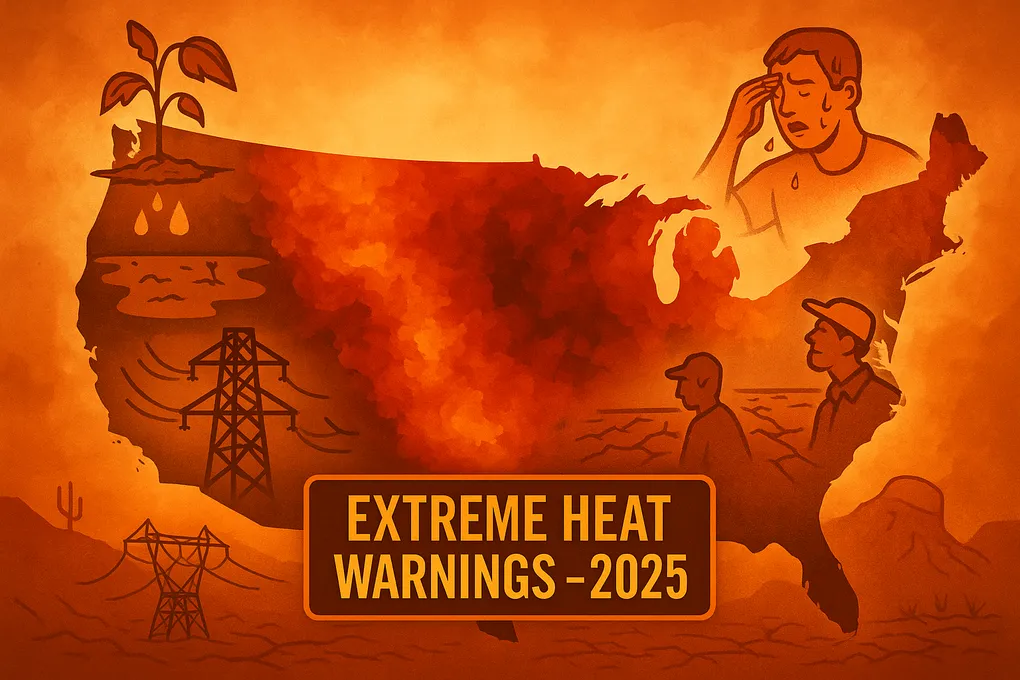
Extreme Heat Warnings in 2025 — Why the U.S. Faces a Growing Climate Emergency
🌡️ The U.S. is heating up. Summer 2025 has brought yet another wave of extreme heat warnings from Arizona to New York, with record highs pushing well above 110°F in some cities.
The National Weather Service (NWS) reports that more than 120 million Americans have been under heat advisories this season. What used to be considered “once in a decade” heat waves are now annual occurrences.
⚠️ What is an Extreme Heat Warning?
An Extreme Heat Warning is issued when temperatures — or the heat index (temperature + humidity) — are forecasted to reach dangerous levels that pose significant risks to human health and infrastructure.
- Excessive Heat Warning (NWS): When the heat index is expected to exceed 105–110°F for at least 2 consecutive days.
- Heat Advisory: Slightly lower thresholds but still dangerous for vulnerable populations.
- Heat Watch: Advance notice that extreme heat conditions are possible.
🔑 In simple terms: it’s the government’s way of saying “It’s not just hot — it’s dangerous.”
📊 The Numbers Behind the Heat
- 2023: Phoenix set a record with 31 consecutive days above 110°F.
- 2024: U.S. heat-related deaths reached over 2,300, making it the deadliest weather hazard (more than hurricanes and floods).
- 2025: Power grid operators report 20–25% spikes in electricity demand during heat waves, raising blackout risks.

🏥 Health Impacts: Why It’s Deadly
Extreme heat isn’t just uncomfortable—it’s lethal.
- Heatstroke & dehydration: Especially dangerous for seniors, children, and outdoor workers.
- Cardiac stress: High temps increase heart attack risks.
- Silent killer: Many deaths are underreported as they’re coded as “cardiac” or “respiratory” issues.
📌 CDC data shows heat kills more Americans annually than any other natural disaster.
💡 State-by-State Impact
| State | Impact 2025 Highlights |
|---|---|
| Arizona | Phoenix crosses 115°F multiple times; cooling centers packed. |
| Texas | Record-high power demand; ERCOT narrowly avoids blackouts. |
| California | Wildfire risk compounded by dry, hot winds. |
| New York | Subway delays and track warping during July heat dome. |
| Florida | Humidity makes 95°F feel like 115°F — highest “feels-like” index in the country. |
🌍 Why This Matters Globally (and for the U.S.)
- Economic Losses: Billions lost in worker productivity, agriculture, and healthcare costs.
- Infrastructure Strain: Power grids, railroads, and water systems are not built for prolonged heat.
- Climate Inequality: Lower-income neighborhoods suffer more due to lack of green cover and cooling access.
- Global Context: Europe, India, and China are facing similar “megadome” heat waves, making this a worldwide climate resilience test.
✅ Coping & Adapting: What Communities Are Doing
- Cooling Centers: Cities like Phoenix and Dallas open free air-conditioned shelters.
- Workplace Adaptations: Construction and delivery companies shifting to night shifts.
- Urban Design: Expanding green roofs, reflective pavements, and urban tree planting.
- Technology: Smart grids, early-warning apps, and wearable health trackers.
🗣️ LinkedIn Debates: Society Divided
Supportive View (Climate Action Needed):
“This isn’t just weather, it’s climate change knocking on the door. We need stronger policies, resilient cities, and investment in renewable energy.” — Sustainability Consultant, New York
Critical View (Economic Concerns):
“Extreme heat warnings are necessary, but regulations that restrict outdoor work hours may hit small businesses hard. Balance is key.” — Texas Construction CEO
📸 Visuals


🎯 Final Word
Extreme heat warnings aren’t just about weather—they are a public health alarm, an economic warning, and a climate wake-up call.
For U.S. readers:
- Stay informed via NWS Heat Alerts.
- Use community cooling resources.
- Support policies that fund climate resilience and infrastructure upgrades.
Because in the America of 2025, heat is no longer a summer inconvenience—it’s the frontline of climate change.